

What To Do When Journaling Doesn’t Help (And You Feel Even More Stuck)
Alternatives To Journaling
A lot of people are told to journal when they feel stuck, overwhelmed, or emotionally blocked.
So they try...
They sit down. They write. They reflect.
And afterward… nothing really changes.
Sometimes it even feels worse.
This may show up like... You write about the same issue over and over, but your body still feels tense, you may understand why you’re stuck, but you still can’t move, then you feel calmer for 10 minutes, but afterwards the old pattern comes back, and eventually you start avoiding journaling because it feels heavy or exhausting.
If this ever happened to you, just know that it’s not because you’re doing journaling “wrong”.
It’s usually because the problem isn’t a lack of insight.
It’s a nervous system issue, not a thinking issue (will explain that in a minute).
So often this happens to those who have already done a lot of inner work, who:
- Are not new to self-reflection
- Are not avoiding looking at things
- Have actually tried
- Can often explain your patterns clearly
- Know where things come from.
And yet, when it matters, the body freezes, you shut down, feel overwhelmed for no clear reason, and you think you know what you want to do, but that thing doesn't work anymore.
If journaling helped you understand, but didn’t help you shift, it might be that the issue isn’t insight anymore, but something happening in the body, not the mind.
What’s actually happening in the body (and why insight alone doesn’t change it)
When something keeps repeating in your life like procrastination, emotional shutdown, overthinking, avoiding decisions, it’s easy to assume the problem is mental.
So you try to think your way through it. Then you try to journal or analyze more, or may be find a "better" “root cause.” But here’s what’s often really happening:
- Your nervous system is stuck in a protective state.
- This isn’t dramatic or pathological. It’s practical.
- Your body learned, at some point, that certain situations weren’t safe - emotionally, relationally, or energetically. So it adapted.
That adaptation might look like freezing when you need to take action, feeling tired or foggy even when you want to focus, shutting down during conversations, feeling overwhelmed by small things, or even 'losing' motivation, clarity, or confidence.
The key thing to understand is this that once the nervous system is activated or shut down, the thinking brain goes offline. So when you journal while your body is tense, braced, or collapsed, you’re asking your mind to do a job your body hasn’t been prepared for.
That’s why people often say, “I know all this already, but it doesn’t change anything.” “I understand my patterns, but I still react the same way.” “I can explain it, but I can’t move.”
So let's say you might sit down to journal about why you keep procrastinating. You write thoughtful things, make good connections, but later that day, when it’s time to actually do the thing, your chest tightens, your energy drops, and suddenly scrolling your phone feels easier than starting.
That’s not a lack of will or that you no longer want that thing.
That’s a regulated vs. dysregulated state.
Journaling works best after the nervous system feels safe enough to engage. When the body is still in protection mode, insight just stays insight.
This is where tools that work with the body, not just the mind, become essential.
What helps instead (and why different tools work better here)
If the issue isn’t a lack of understanding, then doing more thinking-based work won’t create the shift you’re looking for.
What helps instead is starting where the block actually lives - in the body.
When the nervous system is overwhelmed, shut down, or stuck in a protective state, it needs signals of safety before it can support clarity, motivation, or action. That’s why approaches that work directly with breathing, sound, pacing, or sensory input often feel relieving much faster than journaling or reflection.
This doesn’t mean journaling is useless. It means it’s out of order.
Regulation comes first. Insight comes second.
For example, someone who freezes when trying to start a task often doesn’t need another explanation about why they procrastinate. They need their system to settle enough so that starting doesn’t feel threatening. Once that happens, the same person often finds it easier to focus, decide, or follow through without forcing themselves.
This is also why some people say things like, “I tried journaling, but what actually helped was breathwork,” or “Once my body calmed down, everything felt easier.”
They’re not describing motivation. They’re describing capacity.
Tools that support nervous system regulation work by gently shifting your state first. They help your body move out of survival mode and into a state where thinking, choosing, and reflecting become accessible again.
From there, journaling, insight, and inner work actually start to land.
Next, we’ll look at the types of tools that support this shift, and how to choose one based on what you’re experiencing, not based on what you think you should be doing.
Tools that support regulation (and how to use them without overthinking)
Important before you read this section:
These tools are not meant to fix you, push you, or make you “better.” They’re meant to help your nervous system settle or re-engage enough so that everyday life feels more manageable.
You don’t need to use all of them.
You don’t need to do them perfectly.
You start with one, based on how you usually feel.
Start With Pattern Disruption
Instead of trying to analyze more or dig deeper, start with a simple goal:
Interrupt the cycle.
That might look like:
🔹 Pausing before reacting to a trigger
🔹Breathing into the tension instead of escaping it
🔹Asking: What part of me is afraid right now?
🔹Saying: Something is happening in me, not to me.
These are small but powerful disruptors. They signal to your body that something different is possible. Over time, that creates safety in the places that used to feel unsafe.
Let’s say someone who journals every day still finds themselves snapping at their partner during an argument. The insight is there... they know it's about past abandonment. But their body hasn't caught up.
Now imagine they pause for two breaths before answering. That single pause is the
pattern break. It's the moment their healing work starts to embed into real-time action.
Want to Go Deeper? Use These Prompts to Begin the Shift
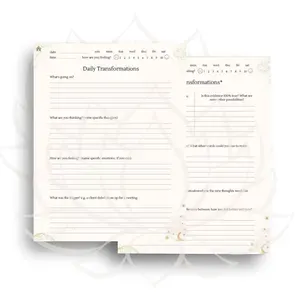
To help you disrupt old loops and start integrating awareness, I’ve created a free 2-page download with:
🔹 Powerful inner - shadow work prompts
🔹 A short daily practice to check-in and notice your default emotional response
🔹 A technique to soften or neutralize the pattern.
Why This Works (and Why It Lasts)
You don’t need a new tool every week. You don’t need more emotional homework.
You need to interrupt what isn’t working. And then repeat the new way—a little at a time—until your body starts to expect something new.
That’s how belief shifts. That’s how patterns dissolve. That’s how healing gets under your skin instead of staying in your head.
Healing isn’t about doing more. It’s about doing the right work in the right layer of your system.
You don’t need another tool. You need to apply the ones you have in the places that actually shift your lived experience.
Start there. And give yourself credit: you’re not broken. You just haven’t been met at the root yet.
That changes now.
By regularly doing the inner work, you can embark on a transformative journey of self-discovery, healing, and personal growth. Remember, your shadow side holds the keys to understanding and embracing your true self.
More inner work tools for Shadow Work & Self Discovery:
DIGITAL SHADOW WORK JOURNAL
PRINTABLE SHADOW WORK JOURNAL
SELF-DISCOVERY AFFIRMATIONS JOURNAL
Disclaimer: To the best of our knowledge the information contained in this website is true and accurate. We cannot guarantee that you will achieve the desired results using these principals as every person and situation is unique and unpredictable. Please use discretion when using the tools suggested and contact a professional for any health, financial, or legal advice. We are not responsible for how you decide to use this information. Some of the offers promoted on this site are affiliate offers. We may be getting compensated for referring you to these offers.
Copyright © 2025 — ClaimBadAssYou journals. All rights reserved.